
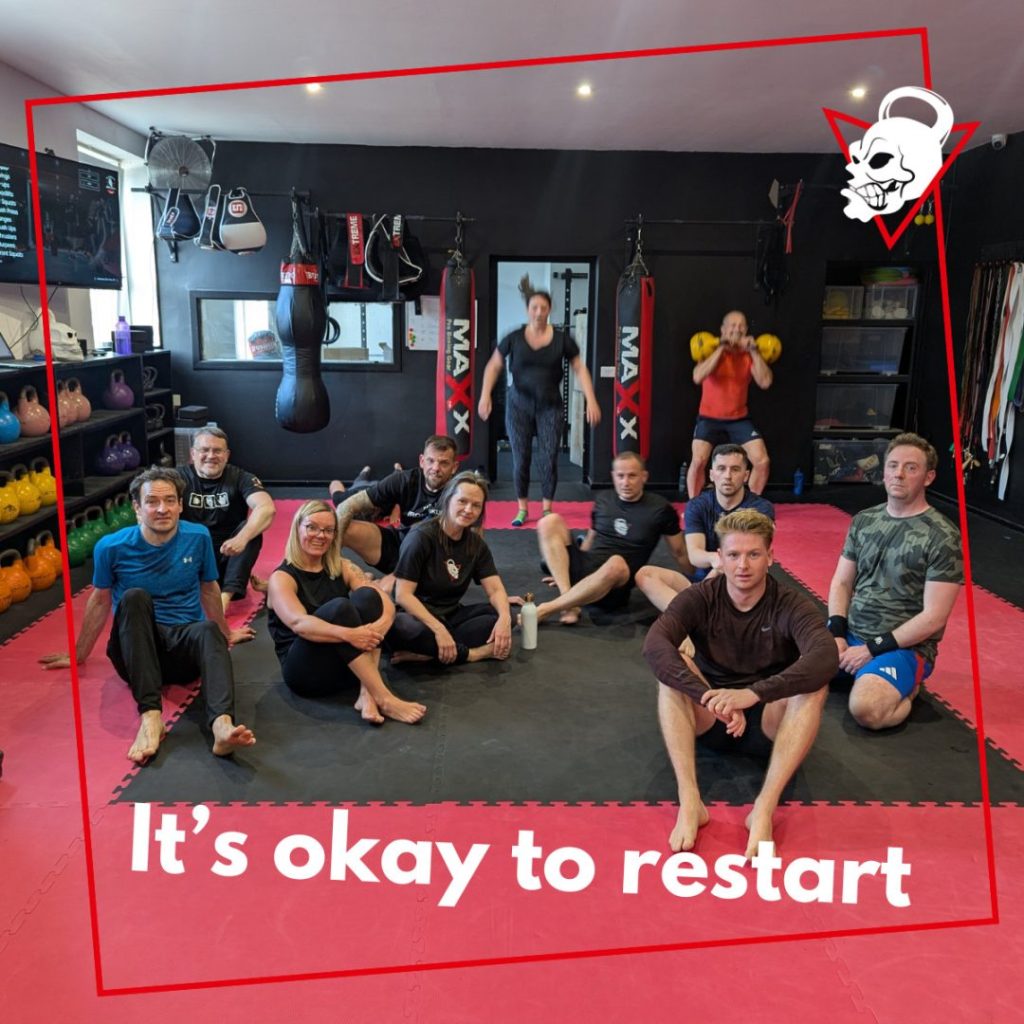
Taking time off training is normal.
Life gets busy. Injuries happen. Motivation dips. Work, family and stress take priority. For many people, the hardest part isn’t stopping training, it’s coming back.
If you’re thinking about returning to training after time off, you’re not behind and you haven’t failed. At Iron Skull Gym, many people in Glasgow return to training after weeks, months or even years away.
Here’s how to do it properly.
Accept That Time Off Is Part of Training
Long-term training is never perfectly consistent.
Anyone who trains over years will experience:
-
Breaks due to work or family
-
Illness or injury
-
Periods of low energy or motivation
-
Schedule changes
Time off doesn’t erase your progress. It’s part of the process.
The goal isn’t to avoid breaks entirely. It’s to return without punishing yourself.
Drop the Pressure to “Get Back to Where You Were”
One of the biggest mistakes people make is trying to train at the same level they left off.
This usually leads to:
-
Frustration
-
Injury
-
Burnout
-
Another break
Returning to training works best when you:
-
Lower expectations temporarily
-
Focus on movement and technique
-
Allow fitness to rebuild gradually
Progress comes faster when pressure is removed.
Start Smaller Than You Think You Should
When returning after time off, less is more.
A good starting point is:
-
One or two sessions per week
-
Reduced intensity
-
Longer rest periods
-
Focus on fundamentals
This approach builds confidence and momentum without overwhelming the body or mind.
Focus on Consistency, Not Intensity
Intensity feels productive, but consistency creates results.
Training consistently at a manageable level:
-
Rebuilds fitness safely
-
Reduces injury risk
-
Restores confidence
-
Makes training enjoyable again
At Iron Skull Gym, returning students are encouraged to train at a pace that supports long-term progress rather than short-term effort.
Expect Some Discomfort, Not Perfection
Returning to training will feel different.
You may notice:
-
Reduced stamina
-
Tightness or soreness
-
Slower reactions
-
Lower confidence at first
This is normal and temporary. These feelings fade as your body adapts again.
Choose the Right Environment to Return
Where you return matters.
A good training environment for returning students:
-
Is supportive, not judgmental
-
Encourages pacing and scaling
-
Focuses on learning, not comparison
-
Respects different starting points
At Iron Skull Gym in Glasgow, coaches expect people to return after time off and structure sessions accordingly.
Use Training to Rebuild Routine
Returning to training isn’t just about fitness.
It helps restore:
-
Routine
-
Structure
-
Stress relief
-
Mental clarity
For many people, training becomes the anchor that helps everything else fall back into place.
How We Support Returners at Iron Skull Gym
Whether you’re returning to Krav Maga, Thai Boxing or Kettlebell training, our approach is the same:
-
No pressure to perform
-
Clear coaching
-
Scaled intensity
-
Focus on fundamentals
You’re welcomed back where you are, not where you think you should be.
Frequently Asked Questions
How long should I wait before avoiding training after time off?
You don’t need to wait. Start lightly and build up gradually.
Will I lose all my progress after time off?
No. Skills and conditioning return faster than you think with consistent training.
Should I train hard to catch up?
No. Trying to catch up often leads to injury or burnout.
How often should I train when returning?
One to two sessions per week is ideal for most people returning after a break.
What if I feel discouraged?
That’s normal. Confidence returns with repetition and familiarity.
Returning Is a Win, Not a Setback
Coming back to training after time off is a positive step.
You don’t need to prove anything.
You don’t need to rush.
You don’t need to be where you were before.
You just need to start again, calmly and consistently.
If you’re looking to return to Krav Maga, Thai Boxing or strength training in Glasgow in a supportive, realistic environment, Iron Skull Gym is built for long-term training, not short-term pressure.

