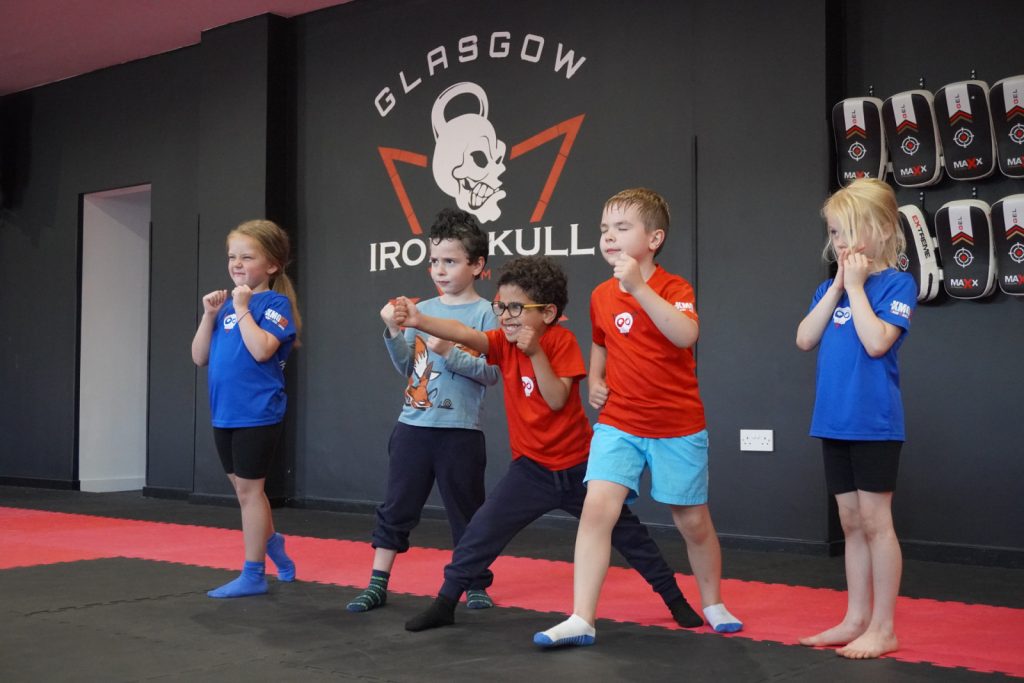
Youth Krav Maga

Evolved

DSC00614 1 - Youth Krav Maga: Evolved

Welcome

Thanks for being part of Iron Skull Gym. Whether you’ve just joined us or been around for years, this guide explains what’s changing in our kids’ and teens’ programmes—and why.

This isn’t just a rebrand or a cosmetic update. It’s the result of everything we’ve learned through years of teaching, constant development, and looking closely at what actually works for our younger students. We’ve also taken inspiration from other successful systems—like British Military Martial Arts—while staying rooted in Krav Maga principles and values.

We’re now introducing a belt and stripe system for Little Defenders (ages 4–7) and Juniors (ages 8–11), and refining how we structure training for teens. 

These changes will:
  • Make progress easier to see and celebrate

  • Help us better track each student’s development

  • Bring more structure and purpose to every class

Table of Contents

Programme Overview

Little Defenders
(Ages 4–7)

  • 40-minute sessions

  • Builds focus, confidence, coordination, and discipline through fun, structured drills

  • No sparring—training is safe, age-appropriate, and scenario-based

Junior Krav Maga
(Ages 8–11)

  • 40-minute sessions

  • Introduces more technical self-defence work and light equipment drills

  • Reinforces teamwork, control, fitness, and personal responsibility

  • Builds the mindset and habits needed for teen training

Teen Krav Maga
(Ages 12–15)

  • 45 to 60-minute sessions, depending on the day

  • Follows the official KMG curriculum, earning KMG patches for each level

  • Includes one weekly mixed session with the adult group, giving teens exposure to higher-level training in a safe, controlled environment

  • We also highly recommend teens aged 14+ attend our Thai Boxing classes—this dramatically boosts their striking ability and overall combative skill set, making it an ideal pairing with Krav Maga
Why We’re Making This Change

We’ve taught many kids and teens over the years, and it became clear that the official KMG grading structure wasn’t the best fit for younger age groups. It’s not about watering anything down—it’s about meeting children where they’re at.

This new system:
  • Gives kids clearer, more achievable goals

  • Lets us track progress more effectively

  • Helps us reward the things that matter: effort, consistency, attitude, and skill

Krav Maga principles remain at the heart of what we teach. This is about delivering those principles better.

Belts & Stripes

 (Little Defenders + Juniors)

We’re introducing a full belt and stripe system to motivate, measure, and reward progress.

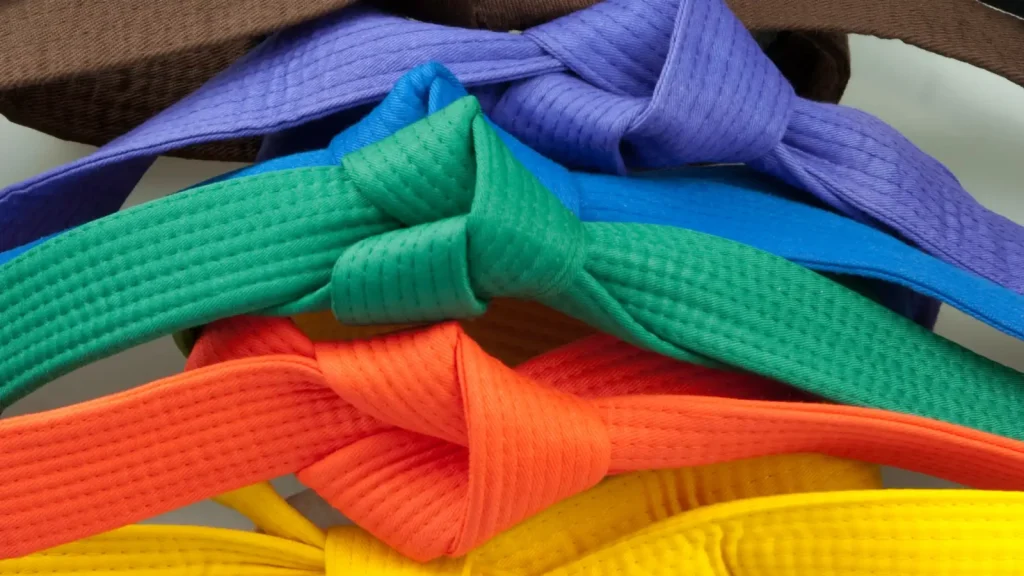
Belt Colours
  • White → Yellow → Orange → Red → Green → Blue 

  • Each belt represents advancement in core skills, character, and ability

Belts will be awarded after the transition period ends, starting in September. Your child’s starting belt will be determined by:

  • Their time training with us

  • Their current KMG grade (if applicable)

  • Their demonstrated skill level

Stripes
  • Earned through focus, improvement, and skill in specific areas

  • Multiple stripes per belt

  • Awarded in class with no pressure or big grading days

Gradings
  • Held 3 to 4 times per year

  • Conducted during class time

  • Used to assess readiness for new stripes or belts

66ec5ab12872ab7a124bae34 63d8c00af34469691289764a all nine karate belts - Youth Krav Maga: Evolved

Core Skill Development

Little Defenders:
8 Core Skills

  1. Focus

  2. Teamwork

  3. Control

  4. Memory

  5. Discipline

  6. Fitness

  7. Coordination & Balance

  8. Safety

Juniors:
5 Core Skill Areas

  • Teamwork

  • Focus & Control

  • Memory & Discipline

  • Self-Defence

  • Fitness & Resilience

These are reinforced regularly and act as the foundation for all progress.
Each core skill will be represented by a different stripe colour, giving students a clear visual indicator of their development in specific areas.

Term Structure & Skill Progression

To make sure the core skills aren’t just words on a poster, we’ve built the entire programme around them.

Each term runs for 12 weeks and is structured to focus on one core skill per week, followed by review, application, and assessment. This gives kids the chance to actually develop each area—mentally, physically, and emotionally—before moving on.

We’re not just running drills. We’re building character, consistency, and confidence through a system that’s clear, progressive, and purposeful.

Here’s an example of how a typical 12-week term for Little Defenders might look:

  • Each core skill has its own stripe colour, so progress is visible and meaningful

  • Skills are reinforced all term, not just in their focus week

  • Teens follow a similar rhythm, but tailored to their level and KMG progression

We’ll share each term’s dates and focus areas in advance, so you always know what your child is working on—and how to support them.

We’ll also publish all term start dates for the entire year well in advance, so you can plan around holidays, commitments, and school breaks. This makes it easier to stay consistent with training and avoid missing key parts of your child’s progress.

Class Format

Classes will follow a consistent structure that builds routine, confidence, and learning:

  1. Warm-up – age-appropriate movement and engagement

  2. Skill of the day – focused technical or character skill

  3. Drills – partner, pad, or group-based exercises

  4. Scenario training – applying skills to realistic, safe situations

  5. Cooldown & reflection – recap and reset

Uniform & Equipment Requirements

We’re introducing a standardised uniform across all youth classes to help build a strong team atmosphere, encourage discipline, and create a sense of unity on the mats.

This isn’t about ticking boxes or selling gear. It’s about setting the tone—mentally and physically—for training. When every child shows up looking ready, they feel ready. Uniform helps shift focus, reduce distractions, and reinforce respect for the class, the instructors, and each other.

We’re rolling out uniform and gear gradually during the transition period (now through the end of August). Full compliance will be expected from September onwards.

All Groups (Little Defenders, Juniors, Teens):
  • Black martial arts-style trousers (gi type)

  • Iron Skull Gym t-shirt

  • Belt (Kids and Juniors once awarded).

  • Patch (Teens once awarded).   

We’re currently sourcing black gi-style trousers to keep costs as low as possible. This is not a money-maker for the gym—it’s about building a proper training environment where everyone is treated equally and knows what’s expected.

Uniform plays a big role in:

  • Building discipline

  • Creating unity and a team identity

  • Helping kids mentally “switch on” for training

  • Establishing consistency and structure in class

Additional Equipment Requirements

Juniors:
  • Boxing gloves

  • Shin pads

Teens:
  • Boxing gloves

  • Shin pads

  • Groin guard

Please wait to buy uniform or gear until we confirm recommended suppliers. If your child already has gloves or pads, bring them in and we’ll let you know if they’re suitable.

Transition Period (Now – End of August)

This summer is our transition period, where we:

  • Introduce new class formats

  • Gradually implement uniform and gear requirements

  • Assess all students for their first belt level

  • Support kids and parents in adjusting to the new system

No belts will be awarded during this period.
First belt awards will begin in August/September, based on each child’s performance and development.

New Enrolment Policy

To maintain quality and consistency in our classes, we are moving to a term-based enrolment system. This means:

  • New students can only join 4 times per year, in line with our grading cycle

  • This creates a more structured learning environment and ensures all students progress together

  • We will no longer accept mid-season trial sessions outside of these periods

Trial classes will be available during the first 3 weeks of each new term, immediately following our quarterly gradings.

* We may allow exceptions in some cases—for example, if a child is transitioning from another martial arts background or has relevant experience.

How Parents Can Support

  • Bring your child on time and in the correct uniform

  • Encourage effort and focus, not just belts

  • Help them remember gear each week (gloves, pads, belt, etc.)

  • Celebrate small wins and personal growth

  • Reach out to us with any questions—we’re here to help

FAQs

Q: Why change the grading system for kids and juniors?

Because it gives us a better way to measure and reward progress. We’ve seen that this kind of system works brilliantly in other schools and fits well with our experience too.

Absolutely. The principles, mindset, and self-defence focus remain exactly the same. We’re just delivering it in a way that’s more tailored to kids’ development.

After the transition period. Our first gradings will take place in August/September, and we’ll award belts based on time, skill level, and current Krav Maga grade.

That’s fine, as long as it’s safe and suitable. Ask us if you’re unsure.

Final Thoughts

This is the next step forward for our youth programmes at Iron Skull Gym.

It’s more than just belts or new class formats—it’s about helping every child develop into a stronger, more confident, and more capable version of themselves.

Thanks for your trust, your support, and for being part of what we’re building.

Who’s training?

This helps us send you to the right place. 
Just pick the option that fits best.

Kids & Teens (Ages 4–16)

For parents looking to check trial availability or join the waiting list for Little Defenders, Juniors or Teens classes.

Adults (16+)

For adults looking to get started with Krav Maga, Muay Thai or Kettlebells via our adult intro option.